Rajesh Touchriver is an internationally esteemed, multifaceted filmmaker and visual artist whose body of work has earned him the moniker “The Conscience of Indian Cinema.” With a career spanning over two decades, he has redefined the boundaries of social realism, utilizing the cinematic medium as a potent tool for human rights advocacy and socio-political critique. An alumnus of the Wimbledon College of Arts in the United Kingdom, his technical mastery is matched only by his deep empathy for the marginalized. He is among the rare league of directors who have successfully navigated seven languages, including English, Hindi, Telugu, Malayalam, Odia, Tamil, and Sanskrit, ensuring his narratives resonate across diverse cultural and linguistic landscapes.
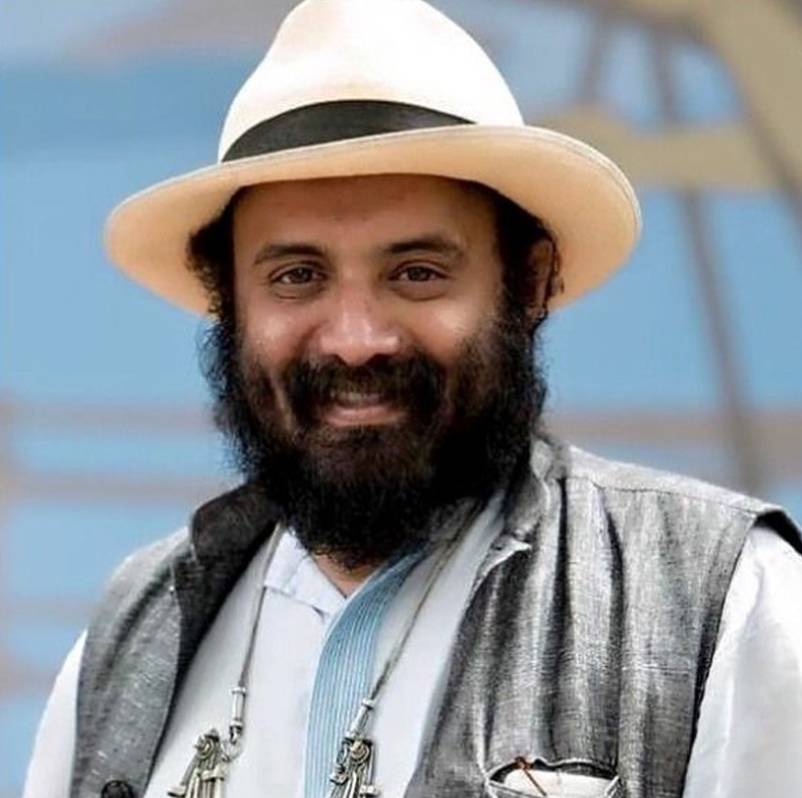
Rajesh Touchriver

His global impact is evidenced by an international footprint that officially represents his work in over twenty countries. His filmography boasts fifty-eight international awards, nine nominations, and twenty-five official selections at prestigious festivals worldwide. He made a groundbreaking directorial debut with the critically acclaimed British film In the Name of Buddha, which spotlighted the ethnic conflict in Sri Lanka. The film achieved immense global reach, premiering at the Oslo International Film Festival and being showcased at the prestigious Cannes Film Festival. It ultimately secured critical acclaim on the global festival circuit; however, its bold and uncompromising narrative led to it being banned in three countries due to its sensitive socio-political content.
Continuing this legacy of fearless filmmaking is his critically acclaimed powerhouse feature Naa Bangaaru Talli (My Dearest Daughter). A brutal yet tender exploration of the real-world horrors of human trafficking, the film became a monumental triumph, securing three highly coveted National Film Awards from the Government of India, five Nandi Awards from the State Government of Andhra Pradesh, and a sweeping array of international accolades, including Best Feature Film at the Trinity International Film Festival and the Indonesian International Film Festival.
Building upon this success, his award-winning film Dahini: The Witch provides a searing critique of the harrowing practice of witch-hunting in rural India, securing further prestigious honors such as Best Feature Film at the Australia International Film Festival and the Pacific Beach International Film Festival. His directorial portfolio remains comprehensive, featuring thirteen feature film titles in various stages of release and pre-production, twenty-two documentaries focused on international advocacy, and five short films.
His career is uniquely characterized by high-profile collaborations with major global organizations, state institutions, and international media. He has directed pivotal media advocacy projects for the United Nations Office on Drugs and Crime, notably the internationally acclaimed film One Life, No Price for social sensitization against human trafficking, featuring prominent spokespersons like Amitabh Bachchan, Preity Zinta, and John Abraham.
His advocacy extends through powerful non-fiction and documentary partnerships with leading international development agencies such as Misereor and Catholic Relief Services, alongside extensive project execution for various State Governments across India. Furthermore, he collaborated with the United States Consulate on critical social awareness campaigns.
Partnering with the leading mainstream media giant Malayala Manorama, he directed the iconic, star-studded music video Ente Malayalam to mark the grand celebrations of the formation of Kerala, a monumental cultural project that brought together major celebrities and icons from the state. Demonstrating his artistic fluidity on the global stage, he also directed the highly acclaimed music video for the single Sunshowers by global music icon M.I.A. for the prestigious British independent label XL Recordings in London. The video was filmed in the jungles of South India.
While his international success is vast, his contribution to Indian cinema is anchored by the highest domestic honors. Beyond the sweeping critical success of Naa Bangaaru Talli, his discerning eye and uncompromising integrity have led the Government of India to repeatedly call upon him to serve in high-level advisory and adjudicatory capacities. He has been appointed by the Ministry of Information and Broadcasting as a National Jury Member for the National Film Awards on three distinguished occasions, alongside serving on the Indian Panorama Jury for the International Film Festival of India.
His artistic philosophy is rooted in social realism and human rights, characterized by a no-filter approach to reality that serves as a witness to the ignored. His work is also marked by linguistic innovation and cultural synthesis. Breaking new ground in contemporary cinema, he ventured into one of the world’s oldest languages with the feature film ANYA, a landmark project scripted in Sanskrit that proves classical Indian language can be a powerful vehicle for modern psychological drama. His background in theatre and visual arts allows him to blend European performance traditions with classical Indian aesthetics.